

When searching for the best interior design software, most comparison articles present generic Top 10 lists that treat all design practices identically.
But professional interior design firms do not operate the same way.
A solo decorator managing two active projects has fundamentally different operational needs than a multi-designer firm coordinating vendor deposits, phased billing, and purchasing across 15 concurrent projects.
The right interior design project management software depends less on visual aesthetics and more on operational architecture: team size, procurement exposure, margin sensitivity, vendor coordination complexity, and financial reporting requirements.
This guide evaluates the best interior design software for professional firms through an operational lens rather than a marketing one. We focus specifically on platforms designed for residential interior design firms managing multiple active projects with coordinated purchasing and client billing across the full project lifecycle.
Most software comparison blogs prioritize surface-level features: interface design, mood board capabilities, proposal templates, and visual presentation tools. While these elements matter for client-facing work, they rarely address the operational risk that emerges as firms scale.
As interior design businesses grow beyond three designers, operational complexity increases in three critical areas: coordinated purchasing across multiple vendors, margin tracking and markup accuracy, and multi-phase billing with financial visibility.
This is where many firms outgrow spreadsheets and lightweight tools. The true difference between interior design software platforms lies in how they handle the operational handoff from specification to purchasing to billing, where profit is either protected or lost.
To provide an objective comparison rather than a subjective ranking, we evaluated professional interior design software platforms across six operational criteria:
1. Project Lifecycle Coverage
Does the software support the full project workflow from concept development through procurement, purchasing, and financial tracking?
2. Procurement and Purchasing Control
Can firms track vendor orders, deposits, purchase orders, markups, and margins at the item level rather than only at the project level?
3. Financial and Accounting Depth
Does the platform support invoicing, payment tracking, complex sales tax handling, financial reporting, and accounting accountability?
4. Operational Visibility and Control
Can principals and operations managers monitor item-level performance, project profitability, and margin accuracy across multiple concurrent active projects?
5. Team Collaboration and Workflow Integration
How effectively does the software support collaboration between designers, principals, procurement staff, and external bookkeepers?
6. Ideal Firm Profile and Operational Orientation
What level of team size, project complexity, and operational maturity is each platform designed to support?
This evaluation framework allows professional interior design firms to match software architecture to their specific operational requirements rather than relying on feature checklists or marketing claims.
The following table compares the five leading interior design software platforms for professional firms based on operational capabilities rather than marketing positioning:
The following section provides operational analysis of each platform's capabilities, limitations, and ideal use cases for professional interior design firms.
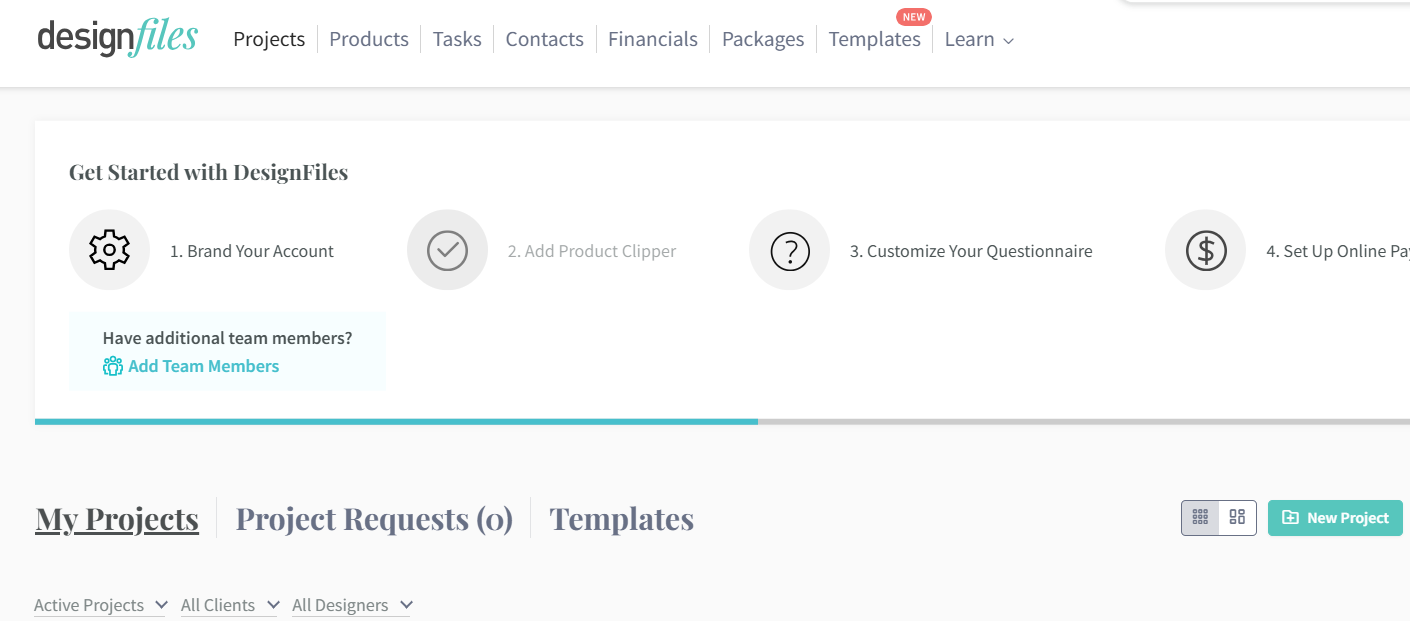
Core Strength: Visual workflow and client collaboration
DesignFiles positions itself as an all-in-one interior design business platform combining visual design tools, client collaboration features, and lightweight project management capabilities. The platform integrates mood boards, 2D and 3D visualization tools, client approval workflows, online payment processing, and basic invoicing functionality.
Operational Focus: Presentation and client-facing workflows
The software emphasizes visual presentation quality and streamlined client communication. It is designed for firms where proposal aesthetics and client approval processes are primary concerns during the early and mid-project stages.
Financial Depth: Basic invoicing and payment collection
DesignFiles provides simplified invoicing capabilities suitable for straightforward billing scenarios. The platform handles basic client payments but is not architected for complex procurement tracking, vendor deposit management, or detailed margin analysis at the item level.
Best For: Small to medium-sized interior design practices prioritizing visual presentation, integrated client collaboration, and unified workflow management without extensive procurement complexity or advanced financial tracking requirements.
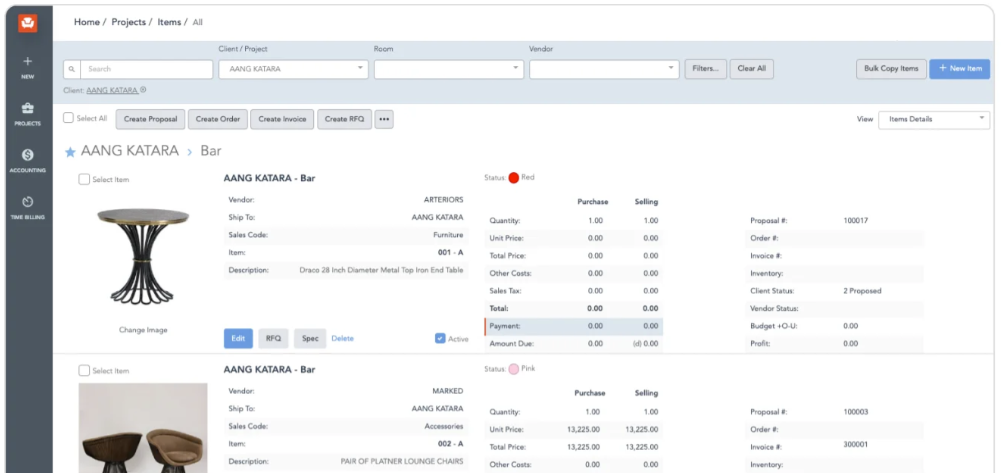
Core Strength: Accounting infrastructure and financial reporting
Studio Designer is widely recognized in the interior design industry as an accounting-forward business management platform. The software provides comprehensive financial tools including integrated vendor management, structured client billing workflows, and detailed accounting reports.
Operational Focus: Financial reporting and accounting lens
The platform approaches project execution by organizing operational activity primarily through financial reporting structures. While Studio Designer includes project management and client-facing features, its architectural emphasis centers on accounting discipline and back-office financial control.
Financial Depth: Advanced accounting and vendor billing
Studio Designer delivers robust accounting functionality with structured financial workflows, purchase order management, and vendor payment tracking. The system supports firms that require detailed financial reporting and established accounting processes.
Best For: Established interior design firms with mature financial processes that prioritize purchasing control, comprehensive reporting, and back-office accounting operations. Well-suited for teams prepared to manage advanced accounting structures internally or with dedicated financial staff.
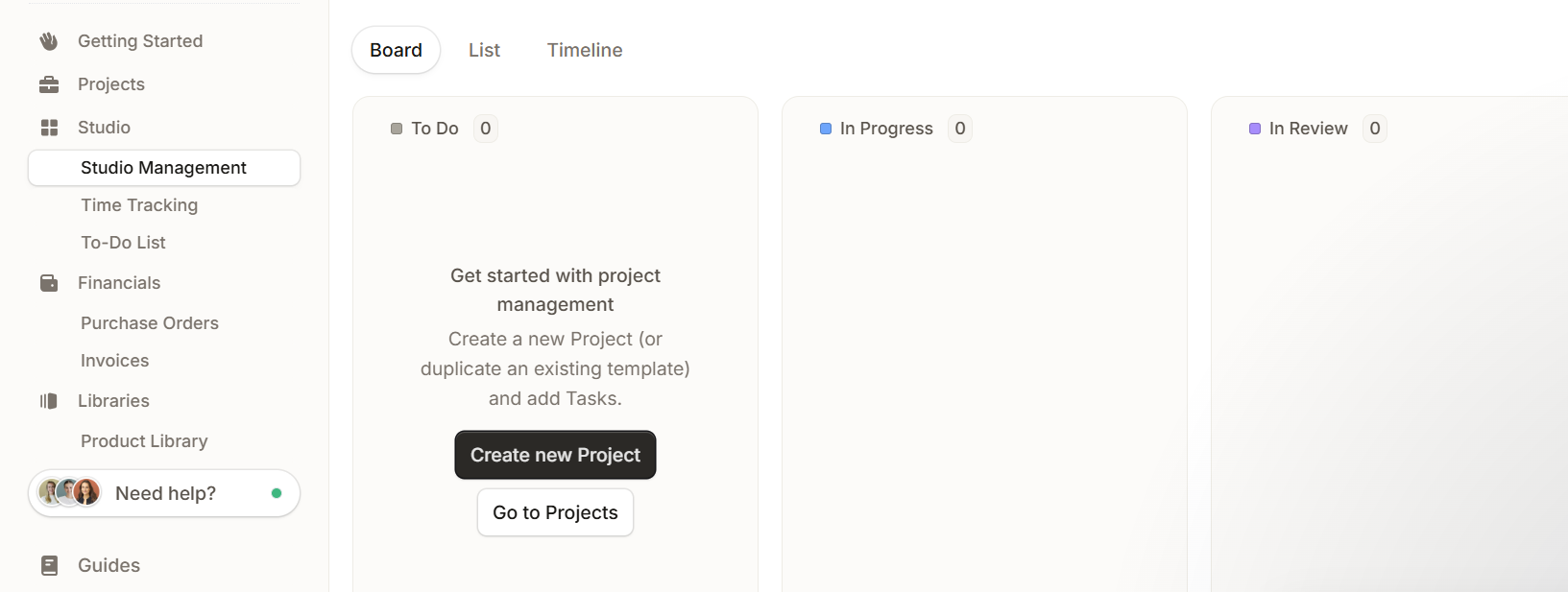
Core Strength: Specification management and design organization
Programa is a specification-focused platform known for its modern user interface and structured design development workflows. The software excels at organizing rooms, products, materials, and project requirements during the concept and design development phases.
Operational Focus: Early-stage design planning
The platform focuses on collaborative specification workflows during the front end of projects. Programa is optimized for design teams that need structured organization during concept development but use separate systems for purchasing execution and financial management.
Financial Depth: None
Programa does not include purchasing, invoicing, or accounting capabilities. Firms using Programa typically pair it with other tools for procurement tracking, vendor management, and client billing.
Best For: Design-centric interior design teams that prioritize strong early-stage specification workflows and intentionally separate concept development from financial execution. Suitable for firms comfortable managing multiple specialized tools across different project phases.
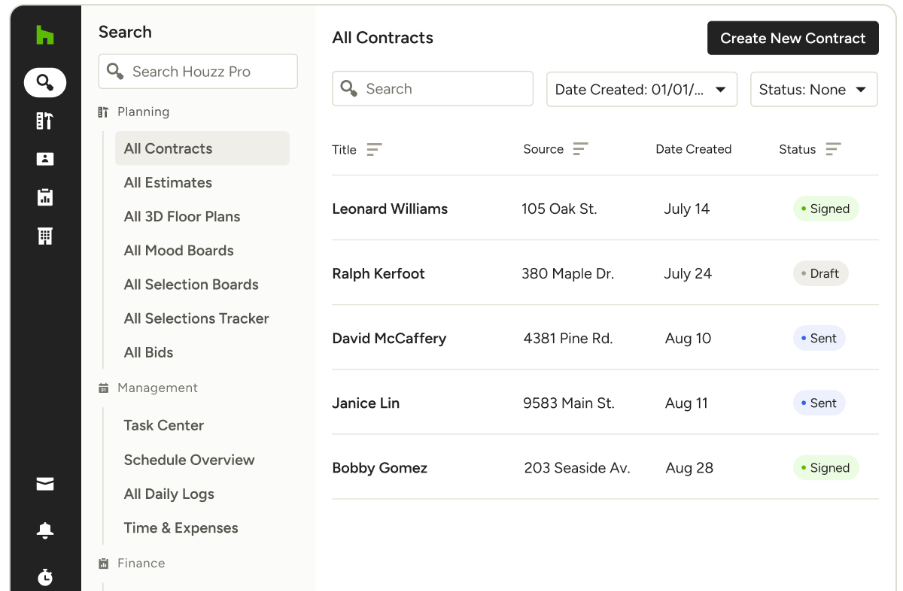
Core Strength: Lead generation and client acquisition
Houzz Pro operates as part of the broader Houzz marketplace ecosystem, combining CRM functionality, proposal generation, basic project management, invoicing, and online payment processing. The platform's primary value proposition centers on marketing exposure and client lead generation through the Houzz network.
Operational Focus: Marketing and client communication
Houzz Pro emphasizes client discovery, communication workflows, and visual presentation tools. The platform serves firms that prioritize new client acquisition and portfolio visibility within the Houzz ecosystem.
Financial Depth: Basic billing and payments
While Houzz Pro supports fundamental billing and payment collection, its financial and procurement capabilities are lighter compared to operations-focused platforms. The system handles straightforward invoicing but is not architected for complex vendor management or detailed margin tracking.
Best For: Smaller interior design firms and solo practitioners prioritizing client acquisition, marketing visibility, and integrated communication tools. Well-suited for practices with simpler project workflows and financial requirements who benefit from Houzz marketplace exposure.
Core Strength: Operational control and procurement management
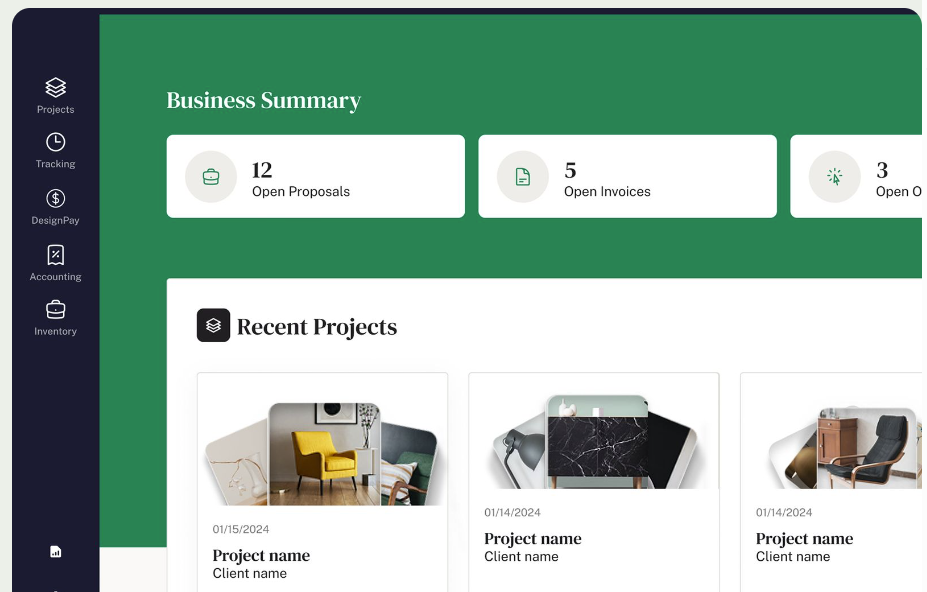
Design Manager functions as an operational backbone for professional interior design firms, providing integrated project execution, procurement tracking, and financial control. The platform is architected as a system of record for firms where procurement complexity and financial risk are operationally material.
Operational Focus: Continuous workflow from specification through billing
Unlike platforms that emphasize either design presentation or accounting in isolation, Design Manager structures project execution and financial tracking as a unified, continuous workflow. The software is purpose-built for residential interior design firms managing multiple concurrent projects with active procurement and coordinated client billing.
Financial Depth: Strong financial integration with item-level tracking
A key architectural differentiator of Design Manager is its item-level tracking capability, which allows firms to monitor individual products and project items from initial specification through purchasing, vendor management, and final client billing. This granular visibility enables real-time oversight of costs, markups, and margin performance at both the item and project level.
The platform handles complex procurement scenarios including vendor deposits, purchase order tracking, change order management, freight coordination, and nuanced sales tax calculations specific to interior design workflows.
Best For: Professional residential interior design firms managing multiple active projects with significant procurement exposure. Ideal for teams with three or more designers who require item-level visibility into purchasing and margins, firms transitioning from spreadsheets to structured operational systems, and practices where financial accountability and operational risk management are business priorities.
Most interior design firms begin actively exploring new interior design project management software when specific operational symptoms emerge that signal their current systems have been outgrown:
Financial Uncertainty: Project margins feel unclear or inconsistent. Principals struggle to answer whether individual projects or the overall business is truly profitable without extensive manual analysis.
Vendor Tracking Breakdown: Vendor deposits, outstanding purchase orders, and payment reconciliation become difficult to track accurately across multiple concurrent projects.
Billing Errors and Delays: Client invoicing errors increase in frequency. Billing cycles extend longer than desired. Change orders fall through the cracks or are not properly documented.
Spreadsheet Dependency: Teams rely heavily on multiple disconnected spreadsheets, manual data entry across systems, and email-based coordination for critical business operations.
Reporting Lag: Financial reporting consistently lags behind project execution. End-of-month reconciliation requires significant manual effort and weekend work.
Professional Credibility Concerns: Principals worry about appearing unprofessional to clients or vendors due to documentation inconsistencies or operational mistakes.
Switching interior design software often becomes operationally necessary when the risk exposure from tool limitations exceeds the friction cost of migration. For growing firms, this inflection point typically occurs when managing five or more concurrent active projects with complex procurement requirements.
Before selecting interior design business management software, professional firms should evaluate their operational requirements across the following dimensions:
Active Project Volume
How many projects does your firm manage simultaneously? Firms consistently running five or more concurrent projects typically require more robust operational infrastructure than solo practitioners managing one or two clients.
Procurement Complexity and Exposure
How many vendors do you coordinate with monthly? What percentage of projects involve custom procurement? How much financial risk does the firm carry in vendor deposits and client fund management? Firms with significant procurement exposure need platforms capable of detailed item-level tracking.
Margin Sensitivity and Financial Visibility
Are project markups manually tracked in spreadsheets or systematically enforced? Can principals access real-time margin performance across active projects? Margin leakage often occurs in the gap between specification and billing—software should close this operational gap.
Team Structure and Collaboration Requirements
How many designers, procurement coordinators, and administrative staff require system access? Do you work with external bookkeepers or accountants who need financial data visibility? Effective software should support collaborative workflows without creating bottlenecks.
Financial Integration and Accounting Philosophy
Does your firm require integrated accounting functionality within your project management system, or do you prefer to maintain separate bookkeeping tools? Some platforms replace QuickBooks entirely; others integrate with external accounting systems.
Workflow Maturity and Operational Discipline
Is your firm in the process of formalizing operational processes, or do you already have established workflows that need digital support? Different platforms serve different stages of operational maturity.
Aligning software selection to these operational realities—rather than to marketing claims or feature checklists, reduces future migration risk and protects long-term profitability as firms scale.
1. What is the best interior design software for professional firms?
The best interior design software depends on your firm's operational complexity and business requirements. Smaller practices may prioritize visual presentation tools and CRM functionality. Multi-project firms with significant procurement exposure typically require advanced item-level tracking, financial visibility, and margin control capabilities. The right platform aligns software architecture with your specific operational needs rather than offering the most features.
2. What interior design software includes accounting features?
Studio Designer and Design Manager both provide integrated accounting functionality within their platforms. Studio Designer emphasizes financial reporting depth and accounting structure. Design Manager integrates operational tracking with financial oversight, connecting project execution directly to accounting workflows. Other platforms like DesignFiles and Houzz Pro offer basic invoicing but typically require separate accounting systems for comprehensive financial management.
3. What is the best project management software for interior designers?
The best project management software for interior designers depends on project volume, procurement complexity, and vendor coordination requirements. Firms managing significant procurement risk often need systems that support item-level tracking and integrated billing control rather than generic project management tools. Platforms purpose-built for interior design workflows handle industry-specific needs like custom procurement, markup management, and design-specific sales tax scenarios.
4. Can interior design software track vendor deposits and purchase orders?
Operations-focused interior design platforms allow firms to track vendor deposits, outstanding balances, purchase order status, and markup calculations across multiple projects simultaneously. This capability is particularly important for residential design firms that manage substantial client funds and vendor deposits. Not all software platforms provide this level of procurement visibility—it is a key differentiator between presentation-focused tools and operational management systems.
5. What software do growing interior design firms use?
Growing interior design firms often migrate from spreadsheets and disconnected tools to structured business management systems that centralize project data, purchasing information, and financial tracking. As firms scale beyond three designers and manage multiple concurrent projects, they typically require platforms that provide operational control, margin visibility, and team collaboration without creating administrative bottlenecks. The specific platform choice depends on whether firms prioritize visual workflows, accounting depth, or integrated operational management.
6. Is Houzz Pro sufficient for established interior design firms?
Houzz Pro effectively supports marketing, lead generation, and basic client communication workflows. However, established firms with complex procurement requirements, detailed margin tracking needs, or multi-project coordination often find Houzz Pro lacks the operational depth required for sophisticated purchasing and financial management. The platform serves client-acquisition priorities well but may not provide sufficient infrastructure for firms with material procurement exposure or advanced financial visibility requirements.
7. What is procurement tracking in interior design software?
Procurement tracking in interior design software refers to the system's ability to monitor products and project items throughout their complete lifecycle: from initial specification through vendor selection, purchase order creation, deposit management, delivery coordination, and final client billing. Advanced procurement tracking includes margin visibility at the item level, vendor payment status, freight coordination, and integration with client invoicing. This operational visibility is critical for firms managing custom procurement and protecting project profitability.
8. Do interior design firms need integrated accounting in their project management software?
Whether firms need integrated accounting depends on procurement complexity and financial exposure. Firms managing vendor deposits, client retainers, multi-phase billing, and complex sales tax scenarios often benefit from integrated financial visibility that connects project execution directly to accounting workflows. This integration reduces the risk of billing errors, improves cash flow predictability, and provides real-time margin visibility. Firms with simpler financial structures may prefer to maintain separate bookkeeping systems and use lighter integration approaches.
9. Can interior design software replace QuickBooks?
Some interior design platforms provide comprehensive accounting functionality capable of replacing QuickBooks for design-specific financial management. Studio Designer and Design Manager both offer integrated accounting systems built specifically for interior design workflows. Other platforms integrate with QuickBooks or external bookkeeping systems rather than replacing them. The decision depends on whether your firm prefers unified operational and financial management or intentionally separated systems with integration points.
10. How do interior design firms know when they have outgrown their current software?
Common indicators that firms have outgrown their current interior design software include: increasing dependency on spreadsheets for critical operations, delayed or inaccurate financial reporting, rising frequency of billing errors, difficulty tracking margins across projects, significant time spent on manual reconciliation, unclear vendor deposit status, and operational mistakes that create client-facing credibility concerns. When operational risk from tool limitations exceeds the migration cost of switching platforms, firms should evaluate more robust business management systems.
11. What is item-level tracking in interior design software?
Item-level tracking enables interior design firms to monitor each individual specified product, furniture piece, or material throughout the entire project workflow: from initial specification through vendor selection, purchasing, receiving, and client billing. This granular visibility includes tracking costs, markups, margin performance, delivery status, and financial accountability at the item level rather than only at the aggregate project level. Item-level tracking is particularly valuable for residential design firms managing custom procurement where margin leakage often occurs in the details between specification and billing.
12. Why does margin visibility matter in interior design business management?
Interior design profitability fundamentally depends on markup accuracy and coordinated purchasing execution. Without systematic margin visibility, firms face revenue leakage from specification errors, incorrect markup application, change orders falling through billing cracks, and delays in invoice creation. Real-time margin visibility at both the item and project level allows principals to make informed operational decisions, identify profitability issues before they compound, and maintain financial control as project complexity increases. Margin protection through operational visibility directly impacts long-term business sustainability for professional design firms.
The best interior design software for professional firms is not determined by feature count, interface aesthetics, or marketing positioning. It is defined by operational alignment between software architecture and business reality.
Firms managing lower operational complexity may appropriately prioritize visual presentation tools and client relationship management. Firms managing procurement risk, multi-project billing cycles, and margin sensitivity require stronger operational control and financial visibility.
The critical decision factor is whether software capabilities match current operational requirements and projected growth trajectory. Selecting interior design software based on operational needs rather than surface-level preferences reduces future disruption, protects profitability, and supports sustainable firm growth.
Professional residential interior design firms should evaluate platforms not by asking which has the most features, but by asking which provides the operational infrastructure necessary to run a serious, financially accountable design business at their current scale and anticipated complexity.

Mi tincidunt elit, id quisque ligula ac diam, amet. Vel etiam suspendisse morbi eleifend faucibus eget vestibulum felis. Dictum quis montes, sit sit. Tellus aliquam enim urna, etiam. Mauris posuere vulputate arcu amet, vitae nisi, tellus tincidunt. At feugiat sapien varius id.
Eget quis mi enim, leo lacinia pharetra, semper. Eget in volutpat mollis at volutpat lectus velit, sed auctor. Porttitor fames arcu quis fusce augue enim. Quis at habitant diam at. Suscipit tristique risus, at donec. In turpis vel et quam imperdiet. Ipsum molestie aliquet sodales id est ac volutpat.

Elit nisi in eleifend sed nisi. Pulvinar at orci, proin imperdiet commodo consectetur convallis risus. Sed condimentum enim dignissim adipiscing faucibus consequat, urna. Viverra purus et erat auctor aliquam. Risus, volutpat vulputate posuere purus sit congue convallis aliquet. Arcu id augue ut feugiat donec porttitor neque. Mauris, neque ultricies eu vestibulum, bibendum quam lorem id. Dolor lacus, eget nunc lectus in tellus, pharetra, porttitor.
"Ipsum sit mattis nulla quam nulla. Gravida id gravida ac enim mauris id. Non pellentesque congue eget consectetur turpis. Sapien, dictum molestie sem tempor. Diam elit, orci, tincidunt aenean tempus."
Tristique odio senectus nam posuere ornare leo metus, ultricies. Blandit duis ultricies vulputate morbi feugiat cras placerat elit. Aliquam tellus lorem sed ac. Montes, sed mattis pellentesque suscipit accumsan. Cursus viverra aenean magna risus elementum faucibus molestie pellentesque. Arcu ultricies sed mauris vestibulum.
Morbi sed imperdiet in ipsum, adipiscing elit dui lectus. Tellus id scelerisque est ultricies ultricies. Duis est sit sed leo nisl, blandit elit sagittis. Quisque tristique consequat quam sed. Nisl at scelerisque amet nulla purus habitasse.
Nunc sed faucibus bibendum feugiat sed interdum. Ipsum egestas condimentum mi massa. In tincidunt pharetra consectetur sed duis facilisis metus. Etiam egestas in nec sed et. Quis lobortis at sit dictum eget nibh tortor commodo cursus.
Odio felis sagittis, morbi feugiat tortor vitae feugiat fusce aliquet. Nam elementum urna nisi aliquet erat dolor enim. Ornare id morbi eget ipsum. Aliquam senectus neque ut id eget consectetur dictum. Donec posuere pharetra odio consequat scelerisque et, nunc tortor. Nulla adipiscing erat a erat. Condimentum lorem posuere gravida enim posuere cursus diam.


Mi tincidunt elit, id quisque ligula ac diam, amet. Vel etiam suspendisse morbi eleifend faucibus eget vestibulum felis. Dictum quis montes, sit sit. Tellus aliquam enim urna, etiam. Mauris posuere vulputate arcu amet, vitae nisi, tellus tincidunt. At feugiat sapien varius id.
Eget quis mi enim, leo lacinia pharetra, semper. Eget in volutpat mollis at volutpat lectus velit, sed auctor. Porttitor fames arcu quis fusce augue enim. Quis at habitant diam at. Suscipit tristique risus, at donec. In turpis vel et quam imperdiet. Ipsum molestie aliquet sodales id est ac volutpat.
Elit nisi in eleifend sed nisi. Pulvinar at orci, proin imperdiet commodo consectetur convallis risus. Sed condimentum enim dignissim adipiscing faucibus consequat, urna. Viverra purus et erat auctor aliquam. Risus, volutpat vulputate posuere purus sit congue convallis aliquet. Arcu id augue ut feugiat donec porttitor neque. Mauris, neque ultricies eu vestibulum, bibendum quam lorem id. Dolor lacus, eget nunc lectus in tellus, pharetra, porttitor.
"Ipsum sit mattis nulla quam nulla. Gravida id gravida ac enim mauris id. Non pellentesque congue eget consectetur turpis. Sapien, dictum molestie sem tempor. Diam elit, orci, tincidunt aenean tempus."
Tristique odio senectus nam posuere ornare leo metus, ultricies. Blandit duis ultricies vulputate morbi feugiat cras placerat elit. Aliquam tellus lorem sed ac. Montes, sed mattis pellentesque suscipit accumsan. Cursus viverra aenean magna risus elementum faucibus molestie pellentesque. Arcu ultricies sed mauris vestibulum.
Morbi sed imperdiet in ipsum, adipiscing elit dui lectus. Tellus id scelerisque est ultricies ultricies. Duis est sit sed leo nisl, blandit elit sagittis. Quisque tristique consequat quam sed. Nisl at scelerisque amet nulla purus habitasse.
Nunc sed faucibus bibendum feugiat sed interdum. Ipsum egestas condimentum mi massa. In tincidunt pharetra consectetur sed duis facilisis metus. Etiam egestas in nec sed et. Quis lobortis at sit dictum eget nibh tortor commodo cursus.
Odio felis sagittis, morbi feugiat tortor vitae feugiat fusce aliquet. Nam elementum urna nisi aliquet erat dolor enim. Ornare id morbi eget ipsum. Aliquam senectus neque ut id eget consectetur dictum. Donec posuere pharetra odio consequat scelerisque et, nunc tortor. Nulla adipiscing erat a erat. Condimentum lorem posuere gravida enim posuere cursus diam.

